Backyard Ultra
Pacing & Tactical Blueprint
Master the 4.167-mile yard. Calculate required running pace per km and mile, execute an efficient 8-minute corral turnaround, and train your body for the hourly restart.
Interactive Yard Pace & Transition Calculator
Model your lap duration against required on-course pace and corral recovery time.
7:27
min/km11:59
min/mile10:00
minutes remainingKey Distance Milestones
| Yard | Elapsed Time | Distance | Significance |
|---|---|---|---|
| Yard 1 | 1h 00m | 4.17 mi (6.71 km) | Base cadence established |
| Yard 6 | 6h 00m | 25.00 mi (40.23 km) | Marathon volume threshold |
| Yard 12 | 12h 00m | 50.00 mi (80.47 km) | Halfway to 100m / Day-to-night route transition |
| Yard 15 | 15h 00m | 62.50 mi (100.58 km) | 100 km threshold |
| Yard 24 | 24h 00m | 100.00 mi (160.93 km) | Official 100-Mile Belt Buckle milestone |
What Is a Backyard Ultra?
Invented by Gary "Lazarus Lake" Cantrell (creator of the Barkley Marathons), a Backyard Ultra is a "Last One Standing" elimination endurance format. Runners do not race toward a finish line—they race against the clock on a recurring loop until only one person remains capable of completing a lap.
100 ÷ 24 Why Exactly 4.167 Miles?
The distance is simple arithmetic: 100 miles divided by 24 hours equals exactly 4.16667 miles (6,705.6 metres / 6.706 km).
Completing one loop every hour ensures any runner surviving 24 hours reaches the 100-mile mark. If you finish in 48 minutes, you earn 12 minutes in camp; if you take 57 minutes, you have only 3 minutes to reset before the next start.
⚖️ The Official Rules
- Strict 60-Minute Cut-Off: Every lap starts exactly on the hour. No early starts are permitted.
- The Starting Corral: Warning whistles sound at 3, 2, and 1 minute. Runners must be inside the starting corral when the bell rings or face immediate elimination.
- No On-Course Aid: Crew support, pacing, and gear handoffs on the loop are prohibited. Aid can only be received in camp between yards.
- The "Last One Standing" Finish: The race ends only when one runner completes a solo lap within the hour. Every other entrant receives an official DNF.
Course Management & The 8-Minute Camp Routine
On-Course Rules
- Power-walk all elevation: Running uphill spikes heart rate out of Zone 2 and burns precious muscle glycogen for minimal time savings.
- Keep cadence steady: Avoid sprinting to the line to bank an extra 60 seconds; save that energy for later yards.
- Adjust for night loops: Shorten stride and scan 4–5 metres ahead when transitioning from trail loops to road/gravel circuits at dusk.
Camp Corral Protocol
- Minutes 0–2: Cross the mat, sit down, and begin eating warm foods or drinking recovery shakes immediately.
- Minutes 3–5: Inspect feet for friction hotspots, change into dry socks (every 4–6 hours), and layer up before shivering starts.
- Minutes 6–7: Visit toilets and use a damp towel to wipe your face/neck for an alert sensory reset.
- Minute 8: Whistles sound (3 min, 2 min, 1 min). Stand up and re-enter the starting corral before the bell.
Hour-by-Hour Fueling Architecture
Returning to your crew station every 60 minutes removes the need to haul heavy hydration packs. Target 60–90g carbohydrates, 400–750mg sodium, and 350–600ml fluids per hour across three key phases:
Gut absorption is high. Rely on dual-source (1:0.8 maltodextrin/fructose) drink mixes and portable flasks. Sip on course and finish with plain water in camp. See our DIY gel recipe →
Sweet palate fatigue sets in around hour 8. Shift 50% of fuel to solid carbs: salted boiled potatoes, white bread with honey/jam, rice cakes, and banana slices.
Core temperature drops and the gut resists heavy solids. Transition to hot broth (instant sodium), ramen soup, baby food pouches, and salted crisps.
Essential Backyard Equipment Setup
Field-tested gear from verified retailers, matching our site catalog and affiliate network.
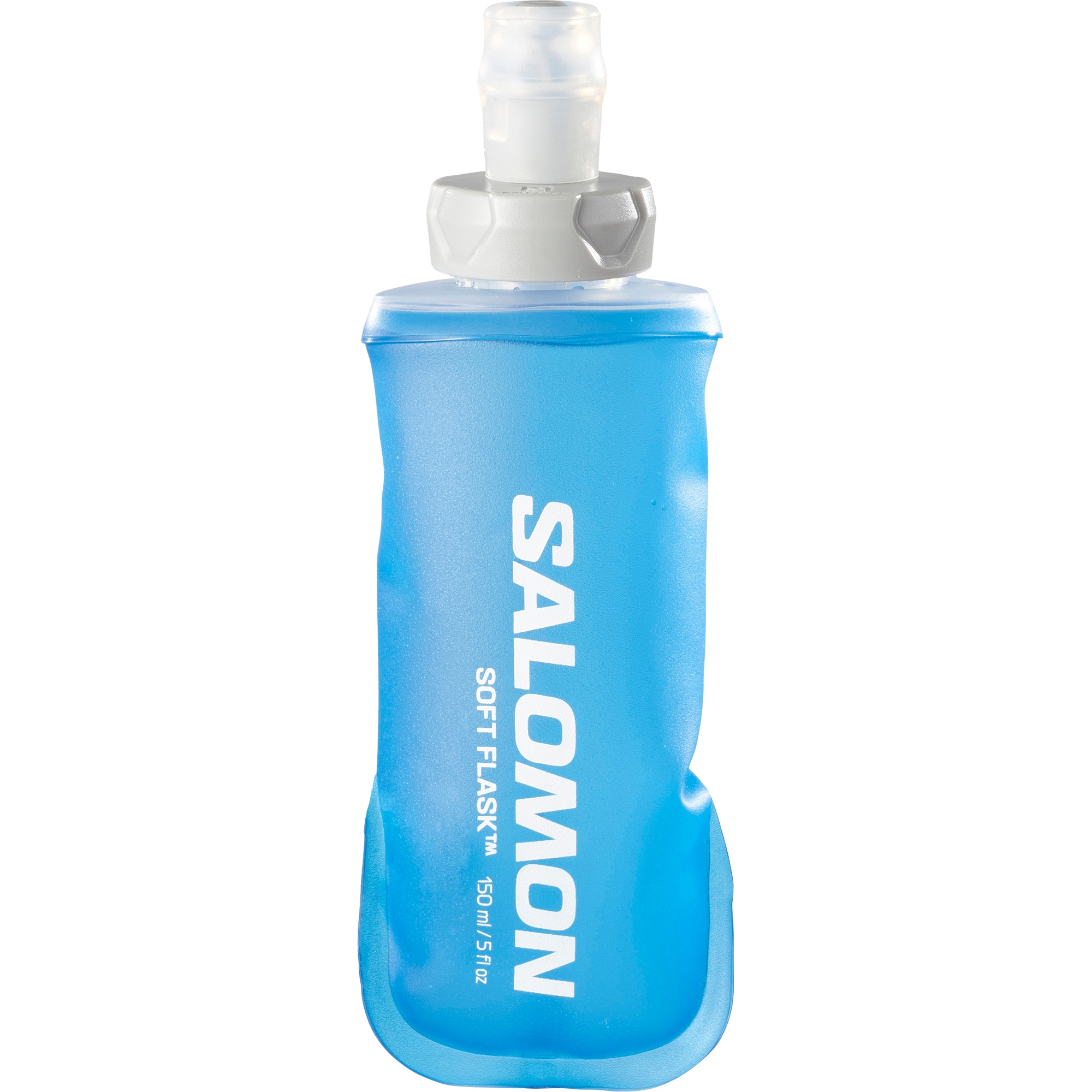
Salomon Soft Flask 150ml
Carries concentrated homemade liquid gels flat against the hips without bouncing.

Salomon Soft Flask 500ml
Wide 42mm cap for fast ice and electrolyte filling during warm daytime laps.

RUNNR ToeFlex Socks
Stops skin-on-skin friction between toes to prevent maceration over 50+ miles.

RUNNR 2-in-1 Shorts
360-degree integrated waist storage carries your soft flask, phone, and salt caps securely.

Reebok Technical Shorts
Ultralight flat-seam design engineered to avoid inner-thigh friction over long durations.
Ultra Headlamp (Swappable Core)
Choose models with swappable lithium cores for 10-second battery changes at camp.
* Some links above are affiliate links. If you purchase through them, we may earn a referral commission at no additional cost to you.
Backyard Ultra Training Principles
Standard continuous long runs don't prepare you for the neuromuscular shock of stopping and restarting cold muscles. Build your block around these three pillars:
Frequently Asked Questions
How does sleep work during a Backyard Ultra?
You cannot bank sleep, but runners surviving past 20+ hours take 4 to 6 minute micro-naps in camp with their legs elevated. This provides neurological resets without falling into deep sleep inertia.
Should you size up your running shoes?
Yes. Natural tissue swelling occurs after 40–50 miles of impact. Pack a second pair of shoes half a size larger (or with a wider toe box) to eliminate pressure on swollen metatarsals.
Can crew members pace runners on the loop?
No. Under official Backyard rules, no physical aid or pacing is permitted on the course. Assistance is only allowed in the designated camp area between yards.